What to Buy First, How the Competitive Scene Works, and What It Actually Costs
Pokémon TCG is the best-selling trading card game in the world. It has been for years, and in 2026 it is not close. As of Q1 2026, Pokémon TCG is the undisputed volume leader globally, ahead of Magic: The Gathering and the newly launched Riftbound. The game is played by children, competitive adults, and collectors who never play at all. These three groups want very different things from it, which is why getting started can feel confusing.
This guide is for players who want to actually play the game rather than collect or invest.
How the game works
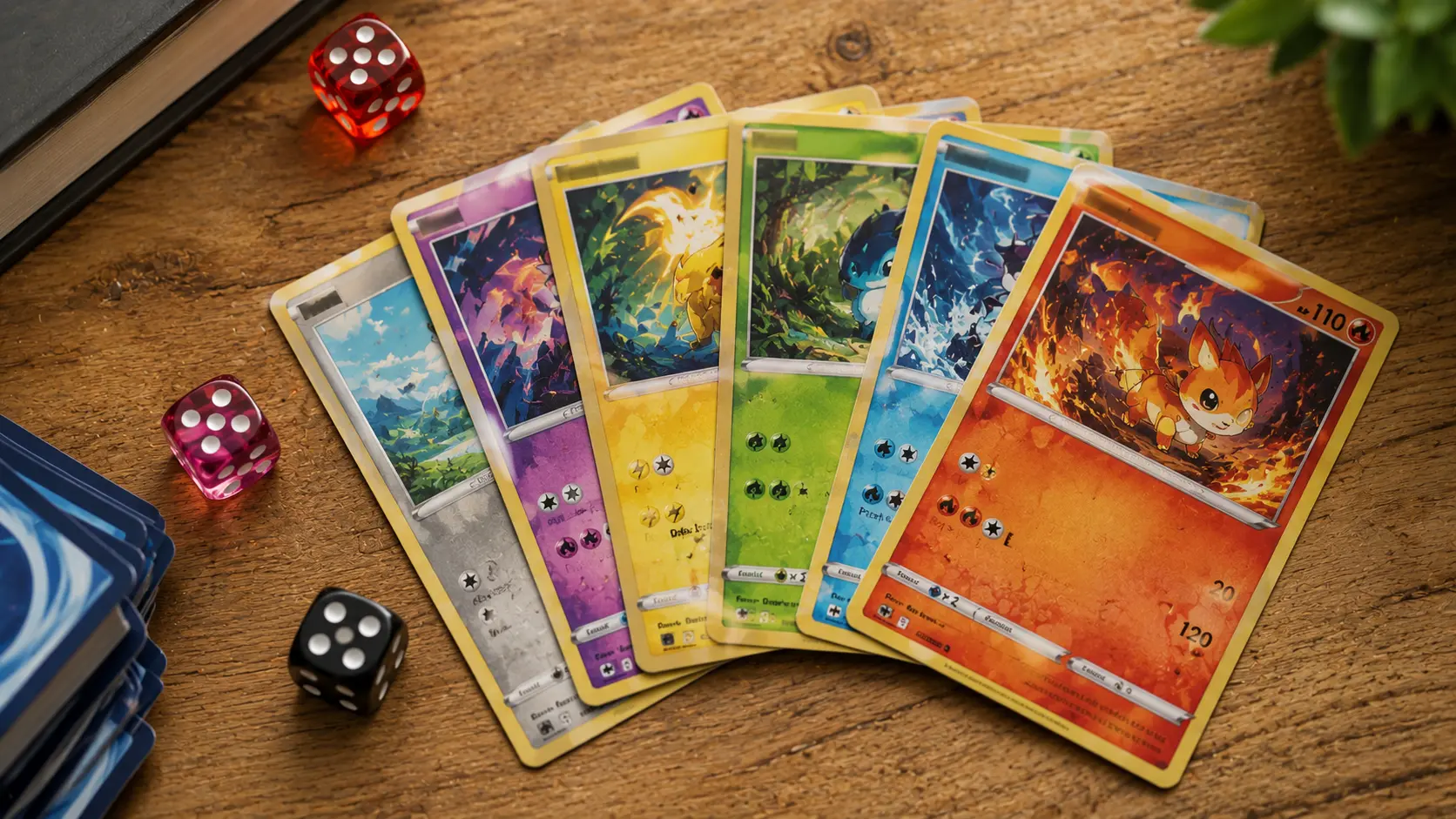
Pokémon TCG is a two-player card game. Each player builds a 60-card deck containing Pokémon cards, Trainer cards, and Energy cards. The goal is to knock out six of your opponent’s Pokémon, or force them to draw from an empty deck. Pokémon attack each other using Energy cards attached over several turns. Trainer cards are one-time-use tools — items, supporters, and stadiums — that provide strategic advantages. Deckbuilding is where most of the game’s depth lives: choosing which Pokémon to center your strategy around, which Trainer cards support that strategy, and how many of each to include.
Matches typically take 20 to 30 minutes. Learning the rules takes one session. Developing meaningful strategic depth takes considerably longer, which is what keeps competitive players engaged for years.
What to buy first
The most common mistake new players make is buying booster packs. Packs contain random cards, which means building a functional deck from packs alone is expensive and inefficient. Once stock hits shelves, competitive singles are typically the most cost-effective way to build a playable deck — but before you are at that stage, start here.
A Battle Deck is the right first purchase. These are 60-card pre-constructed decks designed specifically for new players, sold at retail price (typically $15 to $20), and available at most toy stores and game shops without the scalping pressure that affects booster products. Choose a recent Battle Deck — cards rotate out of the competitive Standard format periodically, so an older deck may contain cards you cannot use in organized play. Battle Decks contain everything needed to play immediately against another person.
After playing a few games with a Battle Deck and deciding you want to go further, the next step is buying singles rather than packs. A tournament-viable budget deck in Standard format costs $50 to $80 in singles in 2026, because Scarlet and Violet era reprints have brought staple Trainer card prices down to $1 to $3 each. Tier 1 decks built around premium EX Pokémon run $150 to $300. You do not need to start there.
TCGPlayer.com is the most widely used marketplace for buying singles in North America. In Europe, Cardmarket is the equivalent. Both allow you to search for specific cards and buy exactly what you need for a target deck list rather than gambling on packs.
The formats
Pokémon TCG has two main competitive formats.
Standard format uses only cards from the most recent sets — currently the Scarlet and Violet era. It is cheaper to maintain because the card pool is smaller and older expensive cards are not legal. This is the right format for new players entering organized play.
Expanded format allows cards going back several years, producing a much larger card pool with more complex interactions and significantly higher deck costs. It is for experienced players who want access to older powerful cards and deeper strategic variety.
How to test before buying
Pokémon TCG Live is the official free digital client. It allows you to build and test decks using digital cards before committing to physical purchases, play against other players online, and earn digital cards through gameplay. The client is available on PC, Mac, iOS, and Android. Using it to test a deck list before buying the physical version is one of the most practical tools a new competitive player has.
How competitive play is organized
The Pokémon Company International runs a structured competitive circuit called the Play! Pokémon program, with Regional Championships, International Championships, and the World Championships as the major events. Local game stores host weekly events called League Cups and League Challenges that are the entry point for organized play — casual enough for newcomers, structured enough that your results count toward rankings.
Finding a local store that runs Pokémon events is the fastest way to improve. Playing against a variety of decks and players in a supported environment teaches more than any amount of online testing.
What it realistically costs to stay current
Pokémon TCG rotates cards out of Standard format annually, typically in April. This means cards you invest in today may become non-Standard in roughly a year. For casual players, rotation is a minor inconvenience. For competitive players, it is a recurring cost — typically $30 to $60 per rotation cycle if you are updating an existing deck with new staples rather than rebuilding from scratch.
The collector side of the game operates on entirely different economics. Rare holographic and full-art cards can sell for hundreds or thousands of dollars and are largely irrelevant to competitive play. The most expensive cards in the game are not necessarily the most useful in a tournament context. Keeping the collector and player economies mentally separate is one of the most useful things a new competitive player can do.
Where to go next
Limitless TCG publishes tournament results and top-finishing deck lists, making it the most practical resource for understanding what is currently competitive in Standard. PokéBeach covers news, set releases, and strategy with a long-running community. The Pokémon TCG subreddit covers both competitive and collector questions with an active community willing to answer beginner questions without gatekeeping.
The game is genuinely accessible at entry level and rewards as much depth as you want to put into it. The main thing standing between a new player and competent play is one Battle Deck, a few hours with Pokémon TCG Live, and a willingness to lose a few games while learning how the pieces fit together.